

Written for Indian law
Every clause follows the Indian Succession Act and the way Indian courts read Wills, not a foreign template.
- Indian Succession Act, 1925
- Executor and guardian clauses
- Checked before you sign

Tell us about your family in a free first call. Our legal team drafts your Will under Indian succession law and we arrange notarisation or registration where you live.
WillSetu is a Will drafting and registration service based in Madhapur, Hyderabad. Our legal team writes your Will around your family, and we take care of the Sub-Registrar office for you.
Every clause follows the Indian Succession Act and the way Indian courts read Wills, not a foreign template.
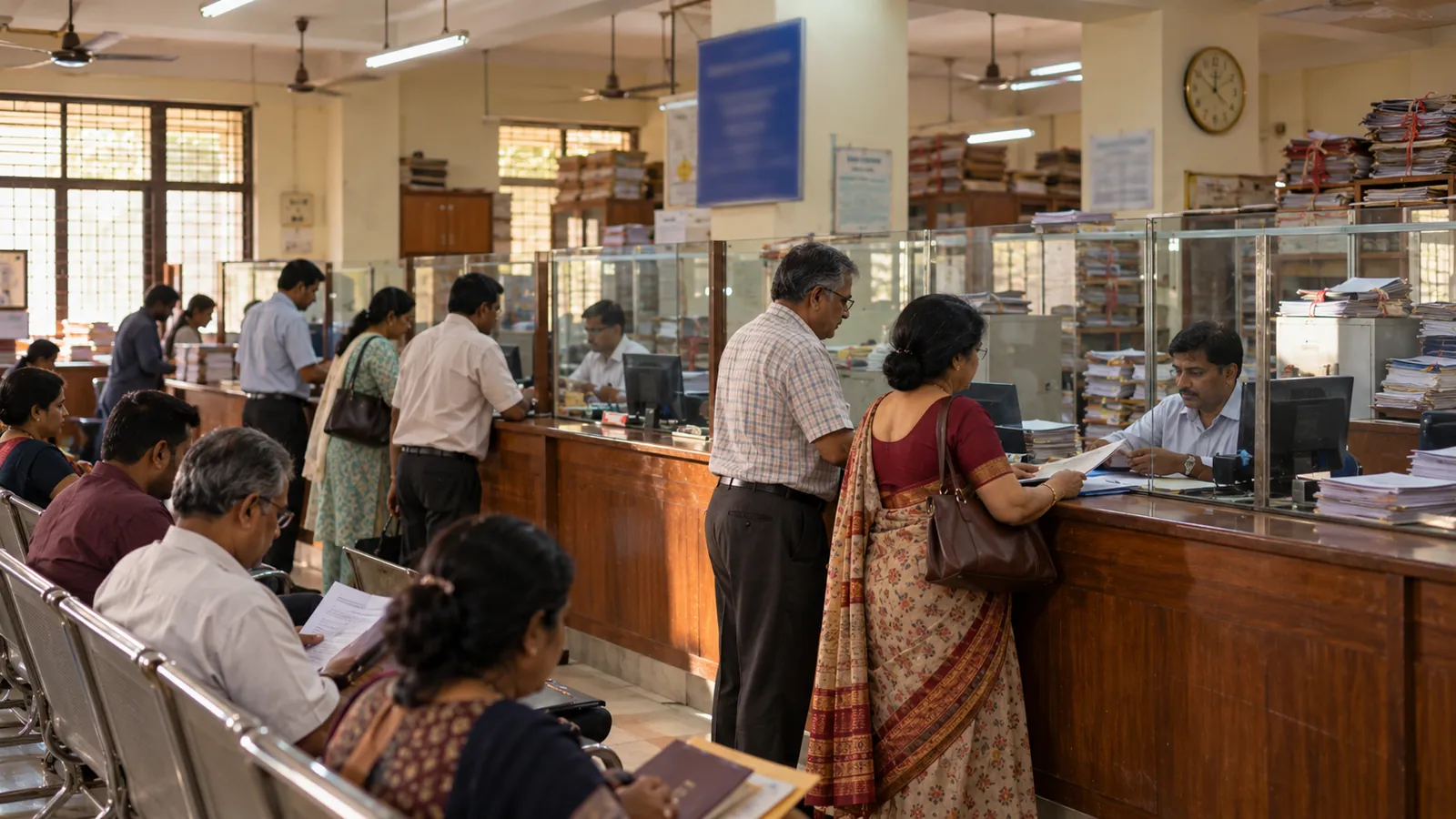
We confirm the Sub-Registrar covering your home, book the slot and tell you exactly what to bring.

The price and what it covers are agreed before you pay. No retainers, no hourly billing.

Your family and property details are used only to prepare your Will, never shared or sold.
Every package includes drafting and review by our legal team. Compare all packages.
 Most chosen
A properly drafted Will, notarised in your city, for one fixed fee. It suits smaller families with a straightforward estate.
 Strongest protection
Your Will drafted, checked and registered at the Sub-Registrar office covering your home. The strongest protection for families with property or more than one child.
 No forms, no apps
Tell us about your family and what you own over the phone. We draft the Will, read it back to you, and arrange notarisation in your city.
 For Indians abroad
An Indian Will for your property and savings in India, signed where you live and registered in your home city.
Four steps, the same for every family. You always know what happens next.
Tell us about your family and what you own. We suggest the right package, and say so if you need less.
Our legal team drafts it, and we go through it with you until it reads exactly right.
We check which Sub-Registrar covers your home address and book the appointment.
You attend with two witnesses. The Will is recorded the same day and handed back to you.
You register at the Sub-Registrar office covering your home address. Our local guides explain how it works where you live.
ProbateFor more than a century, a Hindu Will dealing with property in the three old presidency towns had to be probated before anyone could act on it. In Dec
Will registrationYes, it can. The Registration Act allows an executor or anyone claiming under the Will to present it after the person who made it has died. It is slow
Will registrationRegistration records your Will in the government's books. Deposit keeps it in the Registrar's safe, sealed and unread, until it is needed. Few people
Yes, a handwritten (holographic) will is valid in India as long as it meets the basic legal requirements under the Indian Succession Act, 1925: it must be signed by the person making it (the testator) and attested by at least two witnesses who watch the signing or acknowledgment. Handwriting alone does not make a will more or less legal — what matters is that the document clearly expresses your wishes, is signed voluntarily, and is properly witnessed. However, handwritten wills are also the most likely to be challenged in court due to ambiguous wording, missing witness details, or unclear intent, which is why a professionally structured Will, reviewed by a legal team, reduces that risk considerably.
If you die without a will, you are said to have died 'intestate', and your property is distributed according to the personal succession law that applies to your religion rather than your personal wishes. For Hindus, Buddhists, Sikhs and Jains, the Hindu Succession Act, 1956 decides who inherits; for Christians and Parsis, the Indian Succession Act, 1925 applies; and Muslims follow their own personal inheritance rules. This process can be slower, more expensive, and more likely to cause family disputes than a clear, valid will, since courts and family members must establish legal heirs before any asset can be transferred or sold.
Yes, Muslims in India can make a will, known as a 'wasiyat', but it is governed by Muslim personal law rather than the Indian Succession Act, 1925. Under Sunni law, a person can generally will away only up to one-third of their net estate to non-heirs without the consent of their legal heirs; bequests beyond that limit, or to someone who is already a legal heir, typically require the other heirs to agree after the testator's death. Shia law has some differing rules on this limit and on how consent is treated. Because Muslim inheritance law has important nuances that vary by school of thought, WillSetu drafts each Will to reflect these rules accurately rather than applying a one-size-fits-all template.
No, registering a will is optional in India, not mandatory — a will is legally valid the moment it is properly signed and witnessed, whether or not it is registered under the Registration Act, 1908. Registration does add a layer of protection because it creates an official record with the local Sub-Registrar's office, which can make the will harder to dispute or misplace and easier to prove in court later. Many families choose to register a will for extra peace of mind, especially for larger or more complex estates, but it is not a legal requirement for the will to hold up.
No, a will in India does not need to be written on stamp paper, and no stamp duty is payable on it. This is a common misconception — unlike agreements or deeds, a will is exempt from stamp duty under Indian law because it only takes effect after the testator's death. You can create a valid will on plain paper, or generate one digitally through a platform like WillSetu, as long as it is properly signed and attested by two witnesses.
You can update your will at any time while you are of sound mind, either by creating a codicil (a signed, witnessed document that amends specific clauses) or by writing a completely new will that expressly revokes all previous ones. It's important to clearly state that earlier wills are revoked to avoid confusion or conflicting instructions being found later. Life events such as marriage, the birth of a child, buying property, or the death of a beneficiary are common reasons to review and update your will, and WillSetu allows you to revise your document as your circumstances change.
Your will needs at least two witnesses who watch you sign the document, or who watch you acknowledge your signature, and who then sign it themselves in your presence. Witnesses should be adults of sound mind, and it is strongly recommended that they not be beneficiaries under the will — under Section 67 of the Indian Succession Act, 1925, a bequest to a witness (or their spouse) can be declared void, even though it does not invalidate the rest of the will. Choosing independent, disinterested witnesses, such as colleagues, neighbours, or professionals, is the safest approach.
Yes, a will created online is just as legally enforceable as one drafted in a lawyer's office, provided the final document is printed, signed by hand by the testator, and attested by two witnesses in the traditional way — Indian law does not currently recognise fully digital or e-signed wills as valid on their own. WillSetu's online process is used to accurately capture your details and assemble a legally structured document; you then print, sign, and have it witnessed to make it enforceable. This combination of guided digital drafting and traditional execution is what makes the process both convenient and legally sound.